

How big should a tent footprint be? In the realm of camping trip adventures, the often-overlooked tent footprint plays a crucial role.
Footprint size
Determining the right size tent footprint is crucial before purchasing to avoid unnecessary complications.
Opt for a footprint that is slightly smaller, around 2-3 inches, than the exterior dimensions of your tent to ensure effective coverage.
Consider the top surface area of your backpacking tents, as even a basic 3-person tent, covering approximately 81 square feet, acts like an inefficient rain gutter, directing water around the tent body.
Choosing the right size
Ensuring your tent floor stays dry is a primary function of the tent footprint, making the selection of the right size crucial for cowboy camping or car camping. The footprint should be slightly smaller than the tent floor, creating a protective barrier against wet and muddy conditions.
Your footprint should be at least 1-2 inches smaller (on all sides):
- Choosing a slightly smaller footprint ensures proper coverage without allowing water to collect between the footprint and the tent floor.
- This deliberate size difference prevents the edges of the footprint from extending beyond the tent, which could channel water onto the tent floor.
Measure your floor correctly before buying a tent footprint:
- Relying on estimated measurements can lead to inaccuracies, resulting in the purchase of an ill-fitting footprint.
- To avoid sizing errors, it’s recommended to measure the tent floor accurately before selecting a tent footprint.
Sample chart for tent footprint sizes
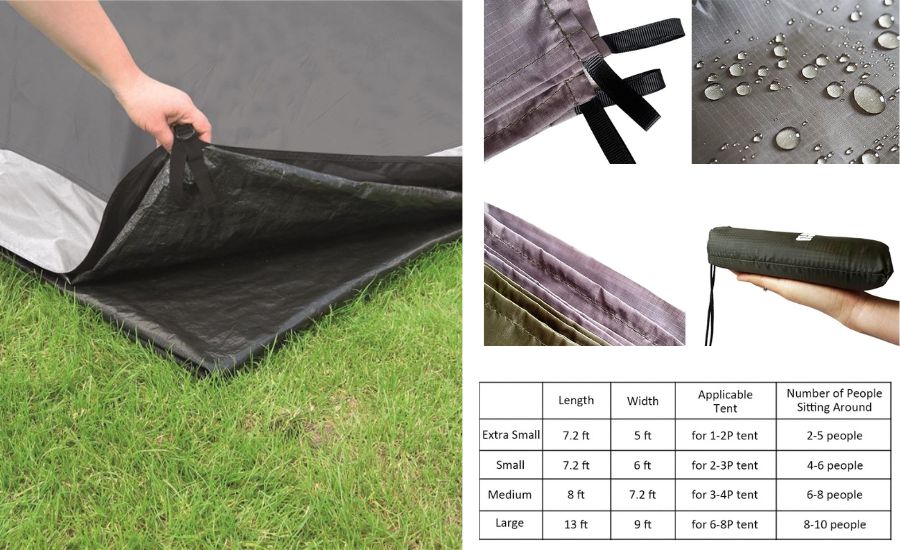
Use a tent footprint size available in the market to make an informed decision based on the accurate measurements of your tent floor.
The sample chart provides a reference point for choosing the right footprint size, avoiding the pitfalls of guesswork, and ensuring a snug fit for optimal protection.
| Tent capacity | Footprint size |
| 2-person | 7’2″ x 4’8″ |
| 3-person | 7’2″x 6’2″ |
| 4-person | 8’2″ x 7’2″ |
| 6-person | 9’8″ x 9’8″ |
| 8-person | 15’8″ x 6’8″ |
Understanding tent footprints
Why do you need a tent footprint? Tent footprints are essential accessories for camping that often go unnoticed. They serve a crucial role in protecting the tent floor from wear and tear, moisture, and abrasions.
Definition and function
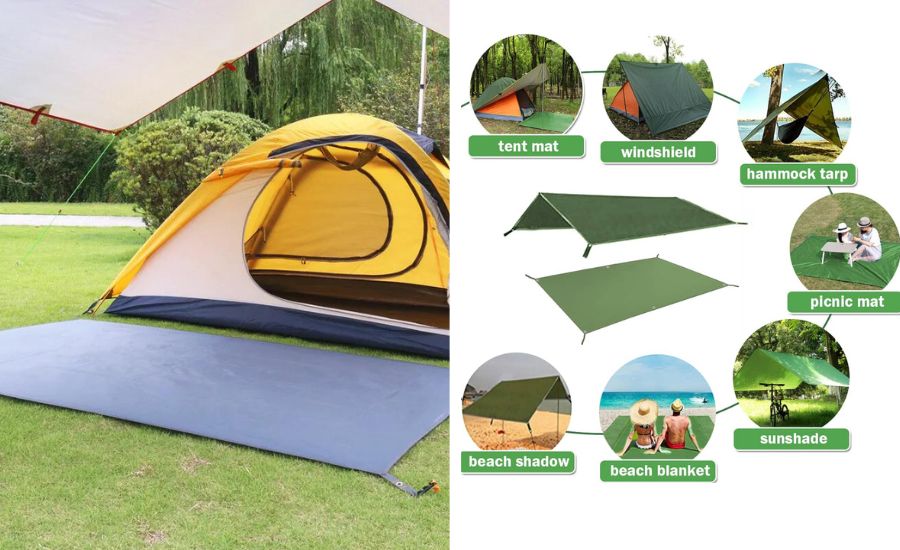
Tent footprints are protective ground covers designed to shield tent floors from damage caused by rough terrain, moisture, and other environmental factors.
Their primary function is to extend the lifespan of the tent by acting as a barrier against ground moisture, preventing abrasions, and offering an additional layer of insulation.
Types of tent footprints
Not all tent footprints are created equal. Various types cater to different needs and preferences, providing campers with options to suit their specific requirements.
Standard footprints:
- These are pre-manufactured footprints designed by the tent manufacturer to perfectly match the dimensions of their respective tents.
- Standard footprints are usually made from durable materials like nylon or polyester and offer a hassle-free, ready-to-use solution for tent protection.
Custom footprints:
- Custom footprints are tailored to fit specific tent models or even multiple tents at the same time, offering a precise and snug fit.
- Campers can choose materials, thickness, and additional features according to their preferences, providing a personalized and often more durable option than standard footprints.
DIY options:
- For the adventurous and resourceful campers, do-it-yourself (DIY) tent footprints allow for a creative and cost-effective approach.
- Materials like Tyvek or heavy-duty plastic can be cut and shaped to match the tent’s dimensions, providing a budget-friendly alternative to commercial options.
Factors influencing footprint size
Selecting the right size tent footprint is crucial, and it is influenced by various factors. Understanding how tent size and shape play a role in this decision is essential for effective camping preparation.
Tent size and shape
The dimensions and configuration of your tent significantly impact the choice of a suitable footprint. Matching the footprint size to your tent size ensures optimal coverage and protection against environmental elements.
Single-person tents:
- For single-person backpacking tents, you should use a tent footprint slightly smaller than the tent’s base dimensions is often sufficient.
- Consider the tent’s shape, whether it’s a traditional A-frame or a more modern design, to ensure the tent footprint adequately covers the entire floor area.
Two-person modern tents:
- A two-person backpacking tent may have varying shapes, such as dome or tunnel designs, influencing the required footprint size for your backpacking tent.
Family tents:
- Family tents, with their larger dimensions and multiple rooms, demand larger footprints.
- Custom or adjustable footprints may be necessary for accommodating diverse configurations, providing comprehensive coverage for the entire tent structure.
Terrain and conditions
The choice of tent footprint size is not solely dependent on most tents’ dimensions; the terrain and prevailing weather conditions play a pivotal role.
Adapting the footprint size to the specific environment ensures effective protection and enhances the overall camping experience.
Rocky surfaces:
- On rocky terrain, a durable and slightly larger tent footprint is essential to shield the tent floor from potential punctures and abrasions.
- Consider using materials with enhanced abrasion resistance to withstand the rugged surfaces commonly found in rocky environments.
Wet or rainy conditions:
- In wet or rainy conditions, it’s crucial to have a tent footprint that extends beyond the tent’s base to create a barrier against ground moisture.
- Opt for waterproof materials like polyethylene or nylon, and ensure the tent footprint covers the tent’s entire floor area to prevent water seepage.
Snowy environments:
- Snowy conditions demand a tent footprint that not only protects against moisture but also provides insulation against the cold ground.
- Choose a footprint with insulating properties or layer it with an insulating material to create a buffer against the freezing temperatures often encountered in snowy environments.
Benefits of adequate tent footprint size
Choosing the right tent footprint size goes beyond mere convenience; it brings forth a range of benefits that significantly enhance your camping experience.
Protection against ground moisture:
- The primary function of a tent footprint is to create a waterproof barrier between the tent floor and the ground.
- Adequate size ensures full coverage, preventing ground moisture from penetrating and keeping the interior of the tent dry.
Extended tent lifespan:
- A properly sized tent footprint acts as a protective layer, shielding the tent floor from abrasions, punctures, and wear caused by direct contact with the ground.
- This protection contributes to an extended lifespan for your tent, preserving its structural integrity over time.
Enhanced comfort and insulation:
- The insulating properties of some footprints add an extra layer of comfort, particularly in colder weather.
- By preventing the transfer of cold from the ground, an adequately sized footprint enhances the overall insulation of the tent, creating a more comfortable sleeping environment.
What to consider besides size?
Beyond the size, several crucial factors contribute to the effectiveness of a tent footprint. Consider these elements to ensure a well-informed choice that enhances your camping experience.
Tent footprint material:
- Most tent footprints are made of materials with high durability to withstand rough terrain and resist wear and tear.
- Opt for waterproof materials like polyethylene or nylon to protect against ground moisture.
- Consider the weight of the material for portability, especially if backpacking or hiking to your campsite.
- Some materials offer breathability, preventing condensation buildup inside the tent.
Durability:
- Choose a tent footprint made from robust materials such as high-denier nylon or polyester to withstand rough and abrasive surfaces.
- Consider the resilience of the material against punctures, tears, and abrasions, ensuring the footprint can endure challenging outdoor conditions.
- Opt for footprints with reinforced edges or corners, as these areas are more prone to wear. This additional reinforcement enhances the overall durability of the tent footprint.
- Assess the expected lifespan of the chosen material, aiming for a tent footprint that offers lasting durability to match the lifespan of your tent.
Water resistance:
- Choose a tent footprint with water-resistant materials like polyethylene or coated nylon to prevent ground moisture from permeating the tent.
- Check if the footprint has sealed seams to enhance water resistance. Taped or sealed seams prevent water from seeping through the stitching, ensuring a dry interior during wet conditions.
- Consider the hydrostatic head rating of the material. A higher rating indicates better water resistance, with a rating of 1000mm or more being suitable for most camping conditions.
- Ensure the footprint provides adequate coverage beyond the tent’s edges to create a barrier against rain runoff and prevent water from pooling around the tent.
Cost:
- Determine your budget for a tent footprint, taking into account other camping gear expenses.
- Different materials and customization options may impact the cost. Consider whether features like custom sizing or premium materials for extra protection against wear and tear are worth the additional expense for your specific needs.
- While footprint cost is a factor, view the purchase as a long-term investment. A slightly higher upfront cost for a durable and quality footprint may save you money in the long run by extending the life of your tent.
- Compare prices across different brands and models to find the best value for your budget.
How to cut your own tent footprint?
Crafting your own tent footprint allows for a personalized and precise fit. Here’s a guide on how to measure and cut your own footprint to enhance your camping setup.
Tools and materials needed
Measuring tape or ruler: accurate measurements are crucial.
Use a measuring tape or ruler to measure the length, width, and shape of your tent.
Marker or chalk: mark the dimensions directly on the chosen material for cutting accuracy.
Scissors or utility knives: choose the appropriate cutting tool based on the material. Scissors work well for lighter materials, while a utility knife is ideal for heavier, more durable options.
Custom footprint material: select a suitable material, such as Tyvek (waterproof material), ground cloth, or a durable footprint tarp, based on your preferences and the specific demands of your camping environment.
Grommets: use grommets from a hardware store as tent poles for the corners of the footprint for secure attachment to the tent stakes.
Create your DIY footprint using a tarp or ground cloth
- Using a measuring tape or ruler, measure the dimensions of your tent’s floor. Ensure you account for any vestibule areas or additional space needed for a comprehensive fit.
- Lay out the tarp or ground cloth on a flat surface and use the measurements to mark the cutting lines.
- Use scissors or a utility knife to carefully cut the tarp along the marked lines, ensuring precision for an accurate fit.
- Reinforce the corners of the tarp footprint by adding grommets. Use a grommet kit to secure them in place.
- Attach straps to the grommets, allowing for easy and secure fastening to tent stakes.
- Ensure the grommets and straps are securely attached, providing stability and preventing the footprint from shifting during use.
How to set up a tent footprint
- Choose a flat and clean area where you intend to pitch your tent. Clear away any debris, rocks, or sharp objects that could potentially damage the tent or footprint.
- Unfold the tent footprint and position it on the ground, aligning it with the intended tent placement. Ensure the footprint is oriented correctly, matching the shape and size of your tent.
- If your tent footprint has grommets or attachment points, secure them to the ground using stakes or pegs. This ensures the footprint stays in place during tent setup and use.
- Once the footprint is secured, proceed to place your tent directly over it. Align the corners of the tent floor with the corners of the footprint to maximize coverage.
- Continue with the standard tent setup procedures, such as assembling tent poles and securing guylines.
- If there’s an excess footprint extending beyond the tent edges, fold it inward. This prevents rainwater from collecting between the footprint and the tent floor.
- Secure the edges of the tent to the ground using stakes, ensuring a taut setup that maximizes the effectiveness of the tent footprint.
Maintenance and care tips
Cleaning and drying:
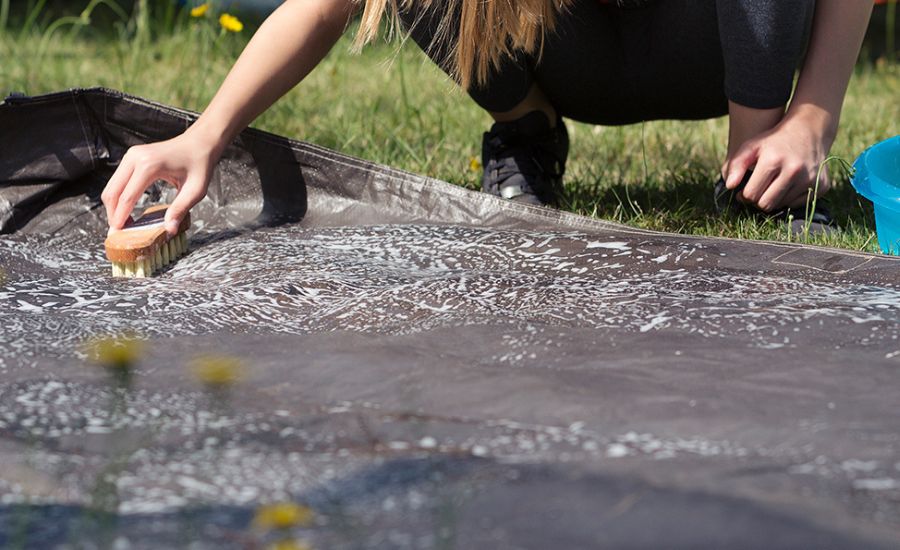
- Clean the tent footprint after each use to remove dirt, mud, and debris. Use a soft brush or sponge with mild soap and water to gently scrub the surface.
- Refrain from using harsh chemicals or detergents that can damage the waterproof coating. Stick to mild cleaning solutions to preserve the integrity of the footprint material.
- Ensure thorough rinsing to remove any soap residue. Residual soap can compromise the waterproofing capabilities of tent footprints.
- Allow the footprint to air-dry completely before storing it to keep your tent clean.
Storage recommendations:
- When storing the tent footprint, fold it rather than roll it. Rolling can cause creases and weaken the material over time.
- Choose a cool, dry place for storage to prevent mold growth. Avoid areas prone to extreme temperatures, as they can affect the material’s integrity.
- If your tent footprint comes with a storage bag, use it. If not, place the folded footprint in a breathable storage sack to protect it from dust and pests.
- Before stowing the footprint, ensure it is completely dry. Any moisture left during storage can lead to unpleasant odors, mold, or mildew.
Final thoughts
Tent footprints of the right size and material require proper care and are crucial for ensuring not only enhanced tent longevity but also a more enjoyable and comfortable camping experience.
FAQ
Are tent footprints worth it?
Do you need a tent footprint? Yes, tent footprints are worth it as they protect your tent and essential gear from wear, tear, and moisture, extending its lifespan.
Besides that, you may use a waterproof rain fly, sleeping bag, and sleeping pad for an extra layer of protection.
Can I use a tarp as a tent footprint?
Yes, a tarp tent groundsheet can be used as a makeshift tent footprint, offering basic protection. However, custom-sized tent footprints provide a better fit.
What is the footprint of a 4 person tent?
The footprint of a 4 person tent varies, but it’s typically around 8’2″ x 7’2″, depending on the tent’s design and brand.
Should the shiny side of a tent footprint go up or down?
The shiny side of a tent footprint should go down to enhance its water-resistant properties and prevent moisture from seeping into the tent.
