
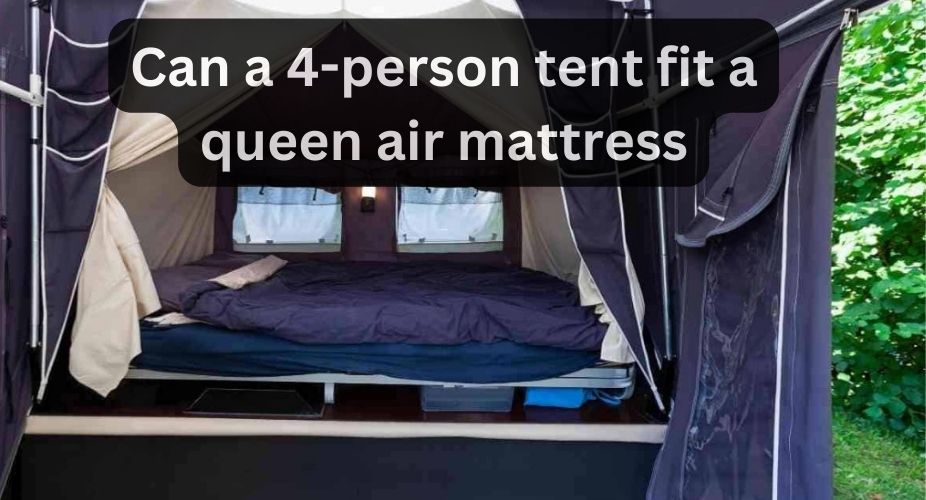
Can a 4-person tent comfortably fit a queen air mattress? Let’s explore the feasibility of fitting these two camping essentials together to help you choose the right size air mattress.
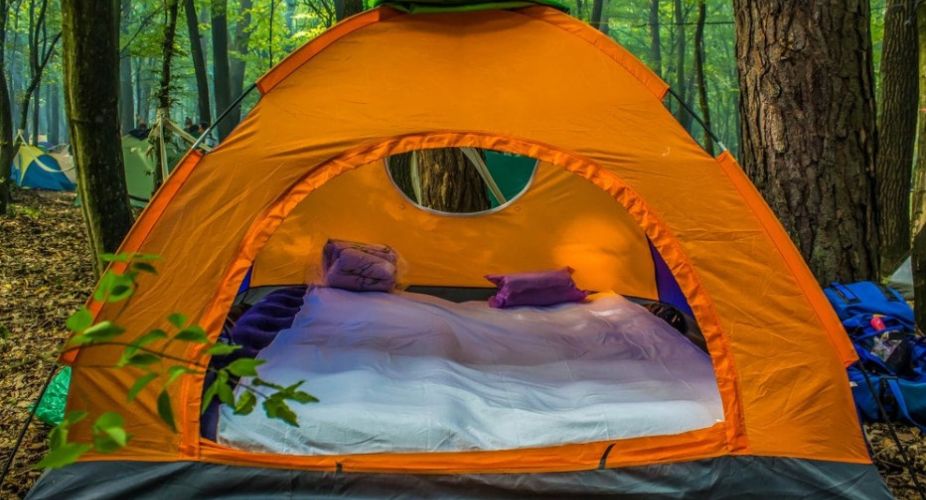
1. Dimensions of a 4-person tent
Understanding the dimensions of a 4-person tent is crucial for assessing its space and purchasing the right size air mattress.
Standard measurements and variations
Typical floor dimensions:
- The standard floor area of a 4-person tent ranges between 50 to 70 square feet.
- Variations may arise depending on the design, shape, and brand of the tent.
Peak height:
- The average peak height for a 4-person tent varies from approximately 50 to 60 inches.
- Different 4-person tent models may have different heights, which affects the available vertical space.
Floor shape and design:
- Tents that are rectangular, dome-shaped, or tunnel-shaped lead to distinct geographical distributions.
- Changes in floor shapes might have an impact on the practical space for bedding and gear.
Additional features impacting space:
- Vestibules, awnings, and extensions can be used to increase the usable space of a four-person tent.
- These rooms, however, may not always be suited for accommodating huge bedding.
Overall variability:
- While marketed as a 4-person tent, the actual size varies depending on the brand and type.
- When choosing mattress accommodation, it is critical to pay attention to precise parameters.
Factors affecting the actual space available
Tent design and wall angles:
- Vertical or sloping walls have an impact on available floor space.
- Steeper walls frequently restrict the available space along the edges of a 4-person tent.
Tent pole structure:
- Interior space is affected by pole design, positioning, and quantity of poles.
- Some 4-person tent types have more pole intersections, limiting headroom or floor area.
Interior features and pockets:
- Storage pockets and gear lofts may take up usable space.
- When organizing a mattress, consider its positioning and influence.
Vestibule and entrance area:
- If present, the vestibule may not necessarily be suited for mattress installation.
- Entrance arrangements may limit the amount of space.
Floor material and slope:
- The floor of a 4-person tent may have a minor slope or be unevenly shaped, affecting mattress positioning.
- The thickness of the material and the reinforcement may vary the perceived floor space.
Manufacturer’s recommendations:
- Manufacturer recommendations may propose the maximum mattress size for maximum comfort.
- Following these suggestions can improve your camping experience.
2. Queen air mattress specifications
Exploring the dimensions and features of a queen-sized air mattress is crucial in understanding its compatibility within camping spaces and choosing the right size air mattress.
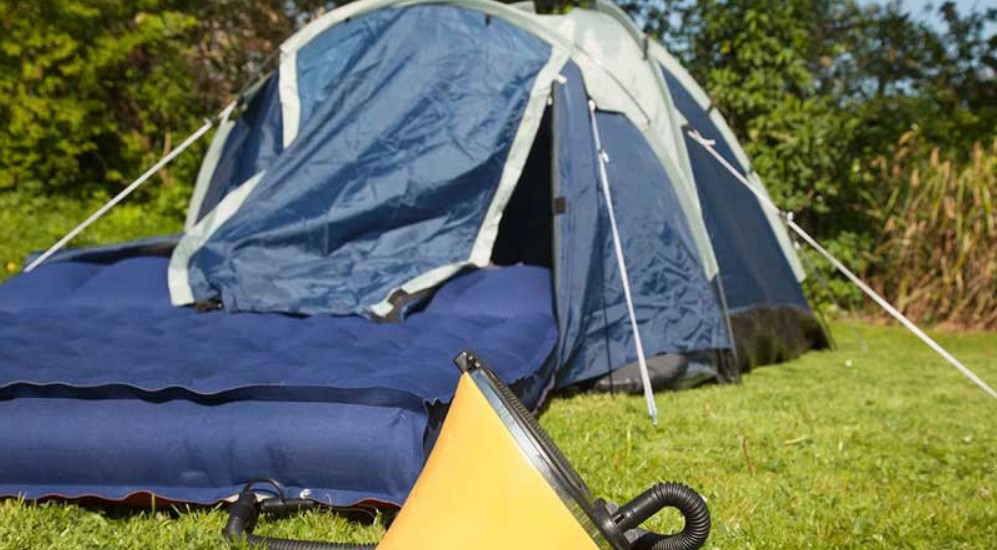
Dimensions of a queen-sized air mattress
Standard dimensions:
- Queen-sized air mattresses are normally 60 inches wide by 80 inches long (larger than a full-size air mattress, which is 54 x 75 inches).
- The height or thickness of a queen-size air mattress can range from 9 to 25 inches, providing varying levels of comfort.
Variations in sizes:
- Some queen air mattresses may have minor variances in measurements, particularly in height.
- Differences in dimensions of air mattresses may affect compatibility with a 4-person tent space.
Material and construction:
- The materials chosen can have an impact on the overall dimensions and durability of an air mattress.
- Understanding the inflated size is essential for determining the fit of a 4-person tent.
Weight and portability:
- Queen air mattresses, despite their bigger dimensions, are designed to be portable.
- For camping trips, the weight and packing size of air mattresses must be considered.
Air pump requirements:
- Different types of air mattress pumps may be required for inflation.
- Pump size and compatibility may have an impact on convenience during camping setups.
Variations in sizes among different models
Height discrepancies:
- The height of a queen air mattress might vary between 9 and 12 inches depending on the model.
- Height differences can have an impact on how well a mattress fits within a 4-person tent, particularly when it comes to tent ceiling height.
Width and length differences:
- A brand may offer a queen-sized air mattress with a slightly wider width, such as 62 inches as opposed to the typical 60 inches.
- Length may also vary, with some versions reaching 82 inches, which is somewhat longer than the standard 80 inches.
Thickness and material impact:
- A company may sell a more robust, thicker queen-size air mattress at 25 inches, which provides additional comfort.
- However, because of the lower headspace in smaller tents, the greater thickness may provide difficulties.
Packed size and weight variances:
- Various brands sell air mattresses in a variety of packed sizes and weights.
- While one type may be easier to store, another may be heavier but more robust.
Unique features affecting size:
- Some types may incorporate built-in cushions or extra cushioning, modifying the overall sleeping space size.
- These extra characteristics may have an impact on the mattress’s compatibility with the allotted 4-person tent area.
3. Fitting a queen air mattress in a 4-person tent
Several key considerations play a vital role in determining the feasibility of fitting a queen-size air mattress within the confines of a 4-person tent.

Floor area measurement:
- To ensure compatibility with the queen-size mattress, measure the floor space of a 4-person tent.
- Compare the inflated mattress size to the available tent floor area.
Shape and layout impact:
- Rectangular tents may be more suitable for a queen-size mattress than dome-shaped tents.
- For a proper fit, consider the design of a 4-person tent about the mattress size.
Clearance around edges:
- Examine the floor for any gear pockets, loops, or attachments that could restrict available floor area.
- Make sure there’s enough space around the mattress for you to move about comfortably within the tent.
Accommodating other gear:
- Consider space for other camping goods in addition to the mattress.
- Optimize the layout to accommodate gear while maintaining sleeping comfort.
Entrance and vestibule space:
- Examine how the entrance area and, if existent, the vestibule affect mattress arrangement.
- With the mattress, avoid obstructing entrances or limiting access to other portions of the 4-person tent.
Ceiling height:
- Check the peak height of the tent to ensure there is enough vertical room for the inflated air mattress.
- To avoid touching or rubbing against the tent’s ceiling, consider the thickness of the mattress.
Sloping walls and angles:
- Take note of the tent’s wall angles; steeper walls may reduce the amount of usable floor space.
- To fit comfortably, make sure the mattress dimensions coincide with the tent’s widest point.
Tent shape impact:
- Due to sloping walls, dome-shaped tents may have less floor space along the edges.
- Rectangular or cabin-style tents with greater vertical walls may provide additional mattress space.
Center vs. edge placement:
- Determine the best location for the air mattress based on the form and height of the tent.
- In tents with higher peaks, center placement may be preferable, but edge placement may be required in tents with lower ceilings.
Inflated height measurement:
- To determine the impact on tent space, measure the inflated height of the queen-size mattress.
- Consider the peak height of the tent as well as the available vertical space when the mattress is fully inflated.
Impact on headroom:
- Thicker mattresses can considerably restrict the amount of headroom available within the tent.
- Check that the tent has enough vertical clearance to support the inflated mattress properly.
Edge space and thickness:
- Thicker mattresses may reduce the amount of floor space available at the tent’s edges or corners.
- Plan mattress location to maximize floor space while keeping mattress thickness in mind.
Testing and adjusting:
- Set up the tent and inflate the air mattress before your next camping trip to ensure a good fit.
- Make any necessary adjustments to create a good arrangement.
Consideration for livability:
- Within the tent, strive for a combination of comfort and functionality.
- Prioritize critical gear while allowing for adequate movement and a comfortable night’s sleep.
4. Strategies for optimizing space
Efficient bedding placement:
- To maximize available floor space, strategically place the queen-size mattress.
- For the best fit, position the mattress lengthwise or widthwise according to the configuration of the tent.
Layering and stacking gear:
- To free up floor space around the mattress, stack items or use under-bed storage.
- When not in use, consider adopting inflatable or collapsible furniture to save room.
Organization and segregation:
- Maintain a neat tent layout by using gear organizers or separate storage sections.
- Create zones within the tent for certain activities or gear types.
Vestibule optimization:
- For larger items, use the vestibule or outdoor storage places.
- To maximize indoor living space, keep non-essential things outside the tent.
Canopy or tarp extensions:
- Set up additional canopies or tarps outside the tent for shaded storage.
- Hanging storage solutions make it easy to access frequently used equipment.
5. Alternative options if the mattress doesn’t fit
Sleeping bag, pad, or cot alternatives:
- Opt for sleeping pads or cots as alternatives to bulky air mattresses that may occupy too much space.
- These options offer compactness and flexibility in smaller tent spaces to provide enough sleeping space for a good night’s sleep.
Layering sleeping solutions:
- Combine smaller sleeping pads or mats to create a makeshift queen-sized sleeping area.
- Layering allows for customization and better use of extra space.
Use a 6-person tent:
- Consider upgrading to a larger 6-person tent if the queen mattress doesn’t fit in a smaller tent.
- A 6-person tent provides more space, allowing for the accommodation of a queen mattress comfortably.
- A 6-person tent ensures ample room for bedding and additional gear.
- Using any 6-person tent model can enhance overall comfort during camping trips.
Conclusion
In balancing tent space and comfort, thoughtful planning and consideration of gear and queen-sized mattress dimensions are essential for a successful camping trip.
If you need to read about Is camping a hobby, please read our article.
FAQ
How many people can fit on a queen air mattress?
Typically, a queen air mattress accommodates 2 to 3 people comfortably with extra room for movement.
How big of a tent do you need for a queen size bed?
A queen-size air mattress fits in a tent with a minimum floor area of around 50 to 70 square feet (or a larger tent) but probably with almost no extra space.
Can a 6 person tent fit a queen mattress?
Yes, a 6-person tent is a larger tent compared to a four-person tent or a three-person tent.
A 6-person tent generally offers free space, and a queen-size air mattress will fit easily, ensuring that you sleep comfortably with extra room for your belongings.
What are the dimensions of a 4 person tent?
A 4-person tent commonly measures around 50 to 70 square feet in floor area and varies in peak height, typically ranging from 50 to 60 inches.
What are the dimensions of a twin-size air mattress?
It measures 38 “x 75”.
This size air mattress fits in almost any tent.
